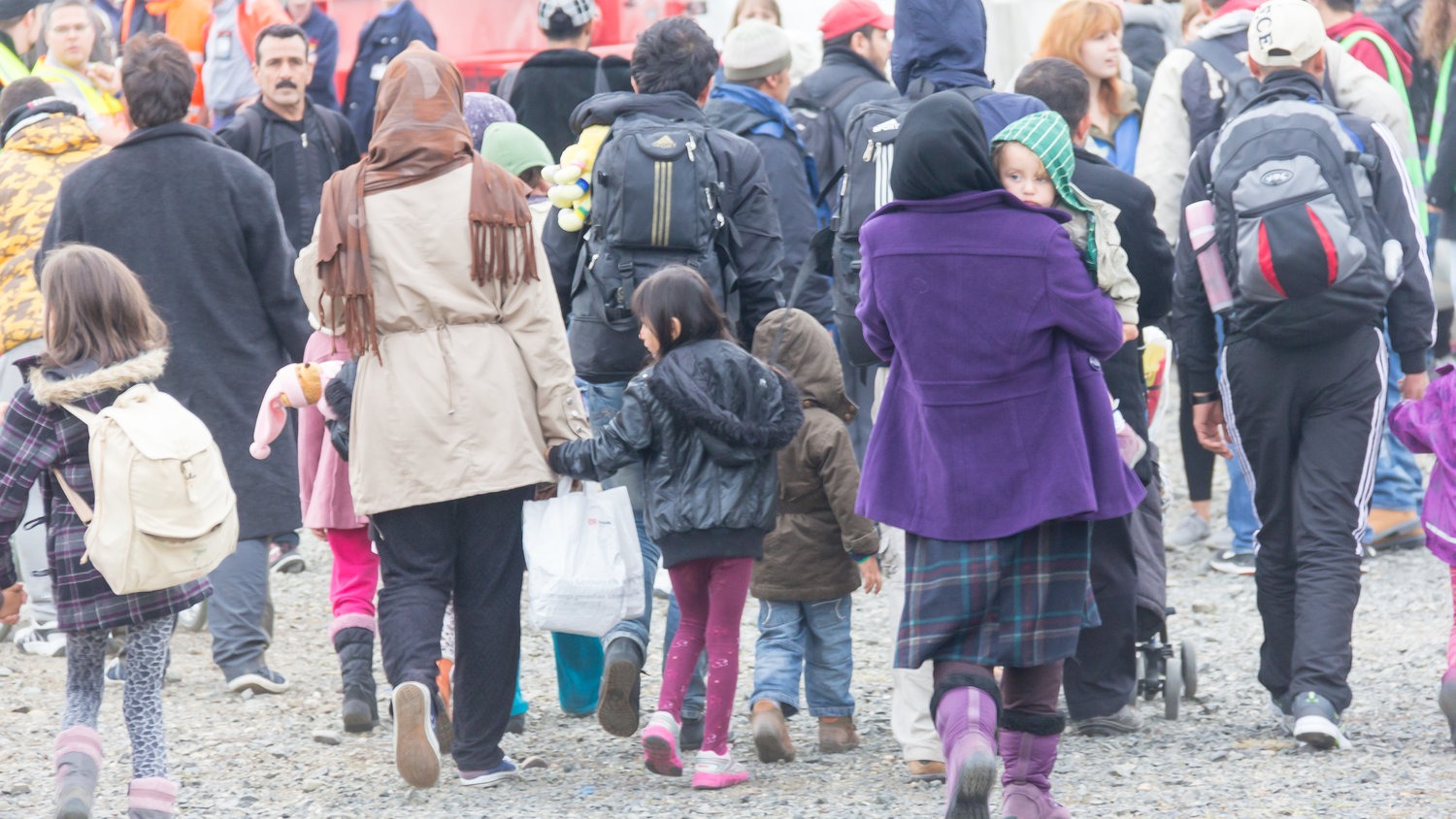
“This city is just overrun”: Armenian refugees stranded in Goris
3 October 2023
By Frances Du
Following Azerbaijan’s swift military operation to reclaim Nagorno-Karabakh, doubts persist over peaceful resolution between Azerbaijan and Armenia.
President Illham Aliyev of Azerbaijan last week declared the reinstatement of Azerbaijani sovereignty over the region, with the self-declared Republic of Artsakh planned to dissolve in January 2024.
The conflict has prompted nearly 120,000 Armenians in the region to flee amid concerns of ethnic cleansing by the Azerbaijani government.
A Swift Victory
The recent Azerbaijani victory in Nagorno-Karabakh left observers bewildered by the swift change of hands.
Michael Kolokossian, Executive Director of the Armenian National Committee of Australia, is currently in Armenia with an Australian delegation.
“We’ve got seven parliamentarians from New South Wales and Victoria, who joined us on this four-day visit, and the agenda was pretty much set – the tools, the meetings – however, three days ago, a humanitarian crisis unfolded in the city of Goris due to Azerbaijan’s bombardment of Stepanakert,” he said.
He added that the bombs hit civilian settlements and more than 200 people were killed.
“The authorities of the self-determined Republic of Artsakh were forced to go into a ceasefire agreement, and it has resulted in them having to negotiate away their right to self-determination,” Kolokossian said.
Kirill Nourzhanov is Deputy Director of the Centre for Arab and Islamic Studies at the Australian National University.
“My understanding is that the Azeri side simply presented the Karabakh Armenians with an ultimatum saying disarm completely, deliver your armaments to such and such a place under the supervision and guidance of Russian peacekeepers,” he said.
Azerbaijan’s Claim’s of Peaceful Integration
The mass exodus of ethnic Armenians from Nagorno-Karabakh following Azerbaijan’s takeover raises questions about the credibility of the Azerbaijani government’s plan for peaceful integration.
Dr Laurence Broers is a Caucasus expert from Chatham House, London.
“It’s been very difficult to assess how credible this intention is because this is a package that has been elaborated without consultation with Azerbaijani civil society, without consultation with international partners, and without consultation, of course, with Armenians themselves,” he said.

Caucacus expert Dr Laurence Broers from Chatham House, London speaks with Frances Du on future prospects in the region.
Azerbaijan representatives have insisted that the Armenian population chose freely to leave and that Azerbaijan is committed to peaceful integration.
In an interview with Aljazeera News, Hikmet Hajiyev, foreign policy adviser to Aliyev, defended Azerbaijan’s actions and gave his assurance that ethnic Armenians would be integrated into Karabakh with equal rights.
“Azerbaijan needs peace, and the region needs peace and therefore Azerbaijan’s message to local Armenians is a message of peace, peaceful integration.”
However, Dr. Broers emphasised the challenges ahead.
“Anti-Armenian feelings, anti-Armenian narratives are embedded at every level in Azerbaijan,” he said.
“What we may see is a small residual Karabakh Armenian population remaining that will have a particular value for Azerbaijan in refuting accusations of ethnic cleansing.
“But it is very challenging to see a long-term presence of a stable community in Karabakh.”
The End of the Nagorno-Karabakh Conflict?
As Nagorno-Karabakh faces an uncertain future, the question of whether this marks the end of the conflict remains unanswered.
The history of violence and territorial disputes in the region casts a shadow over hopes for a lasting peace.
“Azerbaijan has over the last three years experienced this sort of regular surge of military activity and of military victories, and I think that can have an impact on a regime’s understanding of itself and of its legitimacy, and that can create a cycle which is quite dangerous,” Dr Broers said.
“What’s really crucial now is that the interstate level of negotiations continue so that we don’t see this expansion and renewed violence.”